Hello@reuseabox.co.uk
 01636 626 476


 18 November 2026
Moving house is stressful enough without opening a box at the other end to the sound of crunching glass. The good news? Most breakages are avoidable. They usually come down to three things: the wrong box, a weak base, or empty space inside. 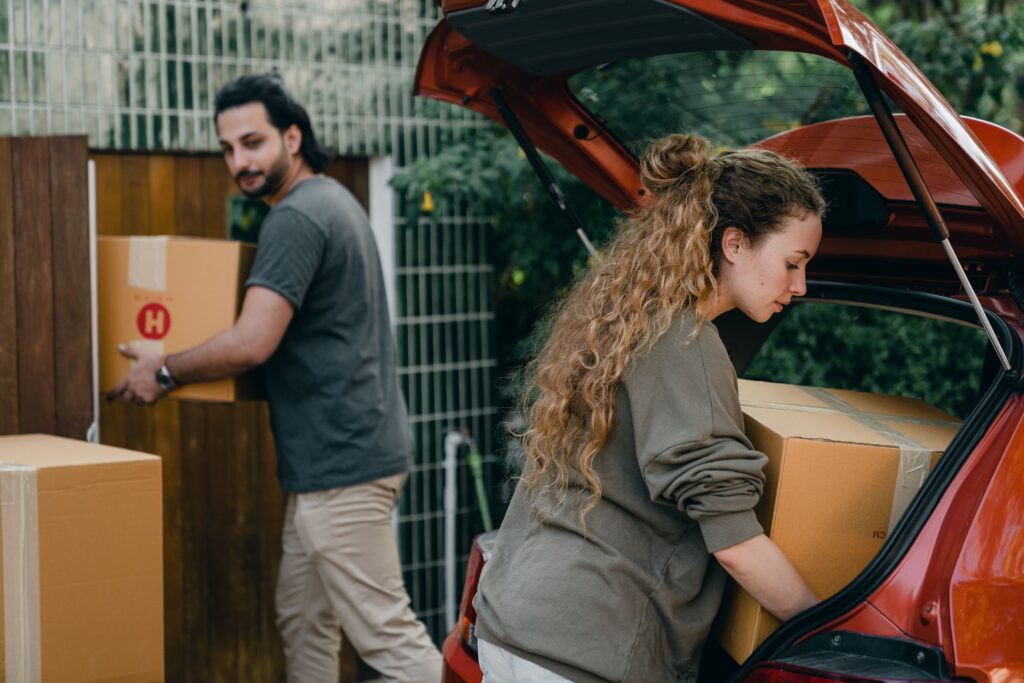
We handle a lot of cardboard boxes. Since 2015, Reuseabox has helped UK businesses reuse over 15 million of them, and every used box we sell is quality checked by our warehouse team before it goes out. So, we know what makes a box hold up, and what makes it give way.
This guide walks you through how to pack boxes for moving, step by step, so everything arrives in one piece. Including your back.
What you need before you start packing
Get everything together before you start. Packing goes much faster when you are not hunting for the tape every five minutes.
- A mix of box sizes. Small, medium and large. You will need more small boxes than you think.
- Strong packing tape. Not sellotape. Proper packing tape, ideally with a tape gun.
- Wrapping for fragile items. Bubble wrap or recycled paper rolls if you want to skip the plastic.
- Something to fill gaps. Eco-friendly void fill, scrunched paper, towels, tea towels or jumpers.
- A thick marker pen for labelling.
- Scissors or a box cutter (keep this somewhere you will find it on moving day).
Not sure how many boxes to get? Our guide to choosing packing boxes for moving house covers sizes and what goes in each one.
Step 1: Build a box that can take the weight
Nearly every box failure starts at the bottom. Folding the flaps in and hoping for the best is not a strategy.
Tape the base properly
Use the H-tape method. Run one strip of tape along the centre seam where the flaps meet, then a strip across each edge. It looks like a capital H.
Never interlock the flaps (that over-under fold). It feels secure, but it creates a weak spot right in the middle of the base.
Give used boxes a quick once-over
Used boxes are just as strong as new ones. A box’s strength comes from its board grade and fluting, not how many times it has been used. All our used boxes are quality checked, but whatever boxes you use, take a second to check for soft corners, damp patches or tears before you fill them.
Step 2: Match the box to what is going in it
This is the golden rule of packing: heavy items in small boxes, light items in big boxes.
A large box full of books will either split or put your back out. A small box full of pillows is just a waste of a box. Think of it this way:
- Small boxes: books, tins, tools, records, small appliances.
- Medium boxes: kitchenware, toys, ornaments, folded clothes.
- Large boxes: bedding, duvets, cushions, lampshades, soft toys.
For anything heavy or fragile, use double wall boxes. They have two layers of fluting, so they cope much better with weight and knocks. Find out more in our guide to double wall vs single wall cardboard boxes.
Step 3: Pack heavy at the bottom, light on top
Inside every box, start with the heaviest items and work up to the lightest. This keeps the centre of gravity low, so the box is easier to carry and less likely to tip. It also stops heavy things crushing delicate things.
If you have a lot of heavy items, spread them across several boxes rather than piling them into one. Top each box up with lighter bits like tea towels or cushion covers.
Step 4: Fill every gap
Empty space is the enemy. If things can move inside a box, they will. And they will bump into each other all the way down the motorway.
Fill gaps with paper, void fill or soft items like socks and towels. Then do the shake test: close the box and give it a gentle shake. If you can hear or feel anything shifting, add more filling.
Bonus: using your towels and linens as padding means fewer boxes overall.
How to pack fragile items for moving
Fragile items need a bit more care, but they are not difficult once you know the tricks.
Plates and bowls
Wrap each plate individually and pack them standing on their edge, like records in a crate, rather than stacked flat. They are much stronger that way. Put a layer of scrunched paper in the bottom of the box first as a cushion.
Glasses and mugs
Wrap each one separately and stuff the inside with paper too. Pack them upright in a small or medium box, with padding between each one so they never touch.
Mirrors and picture frames
Protect the corners first, as that is where most damage happens. Wrap the whole thing, then pack it upright in a snug box. Never lay it flat under other boxes.
Electrical
If you still have the original box, use it. If not, wrap the item well and fill all the gaps. Take a photo of the cables before you unplug anything, and tape small parts and cables in a labelled bag to the item itself.
Mark every box of fragile items clearly as FRAGILE, on more than one side, along with which way up it goes.
Step 5: Do not overfill (or underfill)
A well packed box closes flat. If the lid bulges, it is too full and it will not stack. If the lid caves in, it is too empty and it will crush when something goes on top.
Weight matters too. The double wall boxes in our moving packs can hold up to around 25kg, but just because a box can hold it does not mean you should be lifting it. Keep each box to a weight you can lift comfortably, close to your body, without straining. The Health and Safety Executive has helpful guidance on good lifting technique that works just as well at home as at work.
Step 6: Label like future you will be exhausted
Because future you will be. Good labelling saves hours at the other end.
- Write the room and the contents on each box, not just “kitchen”.
- Label the sides, not just the top. Once boxes are stacked, you will not see the lids.
- Add arrows to show which way up it goes.
- Number your boxes and keep a simple list on your phone, so you know if anything goes missing.
- Pack an open first box with the kettle, mugs, tea, loo roll, phone chargers and bedding for the first night.
For everything else to sort before the big day, see our ultimate house moving checklist.
Step 7: Stack and load smart
A box is strongest at its corners. When you stack, line the corners up so the weight travels straight down, rather than resting a box across the middle of another one.
Heaviest boxes go at the bottom of a stack, lighter boxes on top, and fragile boxes on top of everything. When loading the van, pack tightly so boxes cannot slide around in transit.
What to do with your boxes after the move
Once you are unpacked, please do not bin your boxes. A good cardboard box can be used several times before it needs recycling, and reuse is better for the planet than recycling, because the box keeps doing its job without being remade.
- Flatten and store a few for future storage or your next move.
- Pass them on to a friend, neighbour or local community group who is moving.
- Recycle any that are genuinely worn out.
Bubble wrap can usually be reused too. If it is past its best, it generally cannot go in your household recycling. You can find the nearest one using the Recycle Now locator.
Want to know more? Here is why it makes sense to buy used cardboard boxes for moving house.
Get the right boxes in one go with a Reuseabox house moving pack
Working out how many small, medium and large boxes you need is a job in itself. Our house moving packs do that thinking for you.
Each pack is made up of quality checked, used double wall boxes in a mix of sizes, ready to pack. They come with packing essentials like bubble wrap and tape (check each pack for exact contents). Prefer to go plastic free? Choose the Ditch the Plastic option, which swaps bubble wrap and clear tape for honeycomb paper and paper tape.
There is a pack for every move:
- Budget Small Moving Pack: 15 boxes
- Student Moving Pack: 20 boxes
- 1-2 Bedroom Moving Pack: 24 boxes
- Budget Medium Moving Pack: 25 boxes
- 2-3 Bedroom Moving Pack: 30 boxes
- Budget Large Moving Pack: 37 boxes
- Large Home Moving Pack: 51 boxes
- XL Home Moving Pack: 75 boxes
Because our stock is used, box sizes can vary slightly, and we may swap a box for one of a similar size and strength.
Frequently asked questions
How many boxes do I need to move house?
How heavy should a moving box be?
Are used boxes strong enough for moving?
When should I start packing?


 21 October 2026