Hello@reuseabox.co.uk
 01636 626 476


 15 July 2026
If your business is buying cardboard boxes in volume, you know how quickly a few pence per box adds up across a year, how lead times ripple through your whole operation if you get them wrong, and how not getting the specification right can either make or break your production line.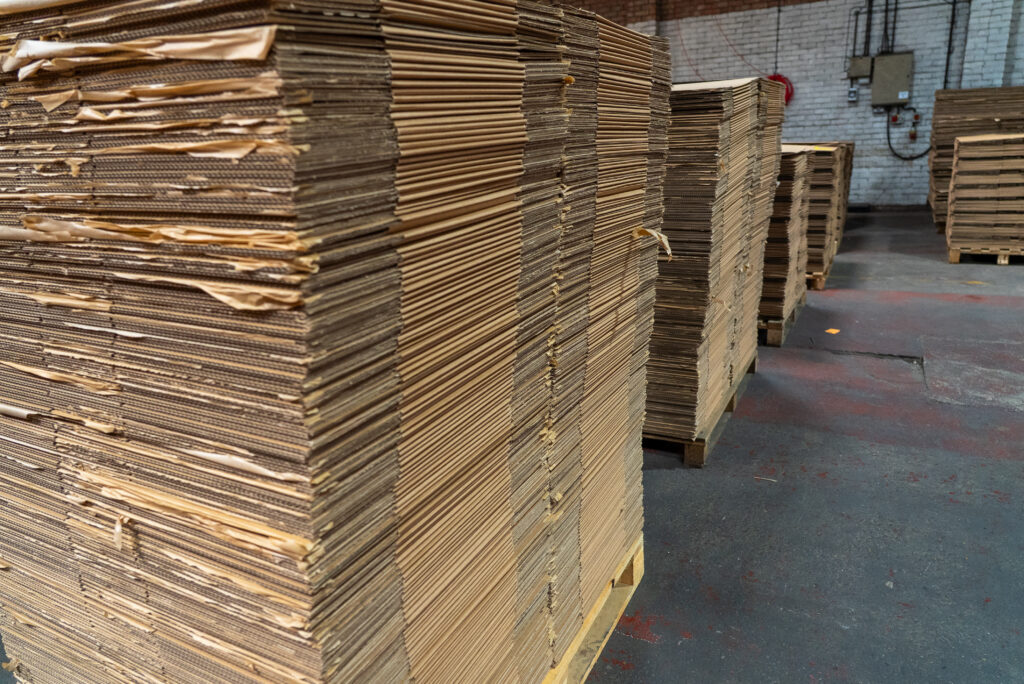
This guide is written for procurement and operations teams buying in bulk, covering where to buy boxes, how pricing scales with volume and why used and surplus stock is the smart choice if you’re looking to save money and reduce your environmental impact.
Where Can UK Businesses Buy Cardboard Boxes in Bulk?
There are four main routes to buying boxes in volume, and each suits a different kind of buyer.
Direct from a manufacturer.
Corrugated box manufacturers produce to your exact specification. This can be the right route if you need a custom size or printed branding. The trade-off is lead time. Manufacturing runs are typically ordered weeks in advance and usually come with a high minimum order quantity, which only makes sense once you’re already ordering at real scale. You also are likely to deal with price increases as board prices from the paper mills creep up.
From a wholesale packaging supplier.
Wholesalers hold stock of standard sizes ready to ship, so you’re not waiting on a production run. This suits businesses that need boxes regularly and in volume, without the lead time and setup cost that comes with custom manufacturing.
Via a used or surplus box wholesale supplier.
Suppliers like Reuseabox sell once used, surplus and end-of-line boxes at a real scale. For large-volume B2B buyers, this isn’t a fallback option: it’s usually a better way to buy boxes. You get the same performance as new stock at up to 50% lower cost per unit, with large quantities of stock ready to go and no manufacturing lead times.
Marketplaces and general retailers.
Amazon, eBay and similar platforms list cardboard boxes, but pricing rarely holds up at real volume, and quality control, box specification and after-sales support are inconsistent. Not built for businesses ordering by the pallet.
For businesses buying in bulk, the real choice is between a manufacturer or a wholesale box supplier (either new or used).
Lead Times: New vs Used Cardboard Boxes
Lead time is one of the most overlooked factors in bulk box buying but can be one of the most costly to get wrong.
| Stock Type | Typical Lead Time | Notes |
|---|---|---|
| Custom-manufactured (new) | 2 – 4 weeks | Longer for bespoke sizes or printed boxes |
| Standard new stock (wholesale) | 3–5 working days | Subject to stock availability |
| Used / surplus stock | 1–3 working days | Held in pallet-ready stock for fast dispatch |
If you’re planning well ahead, setting up a new product line, for instance, a manufactured run to exact spec may be worth the wait. But for ongoing operational supply, waiting several weeks on a new order is a real risk if demand spikes or a delivery is delayed upstream. Used and surplus stock removes that risk almost entirely. It’s already sitting in the warehouse, palletised and ready to dispatch, which is exactly what a business ordering by the pallet load needs.
Quality Checks: What to Ask Before You Buy at Volume
At pallet scale, one inconsistent batch can disrupt a packing line or a whole delivery run. Ask your supplier these questions before placing a bulk order:
-
What’s the wall construction and board grade?
Single, double or triple wall, and the flute grade, determine how much weight the box can carry and how well it resists crushing. Match this to your product, not the cheapest option available.
-
What’s the Edge Crush Test (ECT) rating?
If boxes will be stacked, in a warehouse or on a pallet, the ECT rating tells you how much compression the board can take before it fails. Always ask for this if stacking is part of your operation.
-
If buying used, how is stock checked?
Reputable used box suppliers inspect stock for structural damage, moisture and crushing before resale, batch by batch and pallet by pallet. Ask what checks are carried out to ensure you only get quality used boxes.
-
Are the dimensions and tolerances consistent across a full pallet?
Inconsistent box sizes cause problems on packing lines and with couriers, and the impact can multiply once you’re running a whole pallet through the same process. Ask for a sample before committing to a large order if you haven’t bought from a supplier before.
-
What’s the return or replacement policy on a damaged delivery?
Bulk deliveries occasionally arrive with transit damage. Know the process before you need it, especially when a delivery represents several pallets rather than a single box.
Delivery and Account Options for Pallet-Load Buyers
Palletised delivery is the standard way bulk orders move, and pricing improves as order size increases. Buying by the full pallet, rather than topping up smaller quantities more often, generally reduces both the per-box and per-delivery cost. When comparing suppliers, look at the total landed cost per pallet rather than unit price alone, since delivery charges vary widely between suppliers.
If you’re ordering pallets regularly, ask about a trade account. Most B2B suppliers, including Reuseabox, offer credit account terms on application, usually net-30, which simplifies purchasing for finance teams and makes it far easier to place recurring pallet-load orders without paying per order.
New, Surplus or Used: Why Used Wins at Pallet Scale
| Option | Relative Cost | Lead Time | Best For |
|---|---|---|---|
| New (manufactured to spec) | Highest | 2-4 weeks | Custom sizes, branded packaging, long lead planning |
| New (standard wholesale stock) | Mid | 3-5 days | Standard sizes needed reasonably quickly |
| Surplus (new, end-of-line or overrun) | Lower than new | 1-3 days | Standard sizes, no need for custom branding |
| Used | Lowest – up to 50% less than new | 1-3 days | Pallet-load, cost-conscious high-volume buyers |
At pallet-load volume, used and surplus boxes aren’t a fallback. They should be the default. The structural strength doesn’t meaningfully differ after one prior use, and reputable suppliers check every batch before resale, so there’s no real trade-off in performance.
What changes is the math. A saving of even 20-30p per box turns into a genuinely significant number once you’re ordering by the hundred or thousand, and that saving compounds every time you reorder.
The sustainability case adds to that, rather than competing with it. Buying used cardboard extends the life of existing board rather than drawing on fresh raw material, which matters increasingly for businesses tracking scope 3 emissions or reporting under UK Extended Producer Responsibility (EPR) rules e.g. used packaging sourced domestically may reduce your reportable tonnage. For a business ordering pallet loads every month, that’s a cost saving and a sustainability win landing in the same decision.
Why more businesses are switching to used
The shift toward used and surplus stock isn’t a niche preference anymore, it’s being driven by cost, supply reliability and sustainability reporting pressure all at once. Recycling cardboard is genuinely good for the environment, but it still means re-pulping, drying and reforming the board from scratch, a process that consumes real energy and water before a single new box exists.
Reuse skips that process entirely. A used box goes straight back into service with virtually none of the energy or water cost of remaking it. It’s also worth remembering where reuse actually sits in the official waste hierarchy. It sits above recycling, not alongside it, which is exactly why more procurement and sustainability teams now treat used stock as the first option to consider, not the fallback.
Frequently Asked Questions
Is it cheaper to buy cardboard boxes in bulk?
Does Reuseabox have a minimum order quantity?
How quickly can I get cardboard boxes delivered in bulk?
Are used cardboard boxes strong enough for business use?
Can I get credit account terms when buying boxes for my business?
Where to Buy Cardboard Boxes in Bulk
Reuseabox supplies new, surplus and used cardboard boxes to UK businesses across retail, e-commerce, 3PL and manufacturing, and we’re built for buyers ordering by the pallet.
If your business is ordering pallet loads regularly, get in touch about full-pallet pricing and a trade account, the more you order in one go, the more you save.


 19 August 2026