 Hello@reuseabox.co.uk
 01636 626 476


 27 July 2026
Choosing a cardboard box supplier looks like a simple sourcing decision. That is until something goes wrong. A late delivery holds up a dispatch run, a batch of underspecified boxes fails on the packing line, or a “no minimum order” supplier turns out to be the most expensive option once you’re ordering every week. For procurement and operations teams, the box itself is rarely the hard part. The supplier behind it is.
This guide sets out the questions B2B buyers should ask before signing off a new cardboard box supplier in the UK, covering minimum order quantities, lead times, quality standards, sustainability credentials, account terms and returns policy.
What to Ask About Minimum Order Quantities
Minimum order quantities (MOQs) shape how you buy, so it’s worth understanding a supplier’s structure before you commit, not after your first order arrives.
- Is there a minimum order at all, and does it change by box size? Some suppliers apply a blanket MOQ across the range; others vary it by box type or size. Ask for the specific figure on the sizes you actually use.
- How does pricing scale with volume? A “no minimum order” policy sounds buyer-friendly, but it tells you nothing about whether ordering more saves you money. Ask for the price break points so you can see where the real savings start.
- Can order quantities flex with demand? Seasonal businesses in particular need a supplier who can scale an order up or down without penalty, rather than one who locks you into a fixed quantity regardless of what a given month actually needs.
What to Ask About Lead Times
Lead time is one of the most consequential, and most commonly under-questioned, parts of a supplier relationship. Because it’s invisible until the moment it fails you.
- What’s the standard lead time for the sizes I need? A verbal “usually a few days” isn’t a commitment. Ask for a stated lead time you can hold the supplier to, and what happens if it’s missed.
- Does lead time change during peak periods? Suppliers under strain in the run-up to Christmas or during promotional peaks may quietly extend lead times without flagging it. Ask how lead times are communicated if they shift.
- Is stock held ready, or made to order? Suppliers manufacturing to order will typically need longer lead times than those holding ready stock. If your business can’t absorb a multi-week wait, a supplier holding used, surplus or standard stock ready for dispatch is the safer choice.
- What’s the contingency if a delivery is delayed? Ask what backup the supplier has, alternative stock, a second site, a partner network, if their own supply chain hits a problem.
What to Ask About Quality Standards
Price comparisons across suppliers only means something if the boxes are actually equivalent. And that comes down to spec, not appearance.
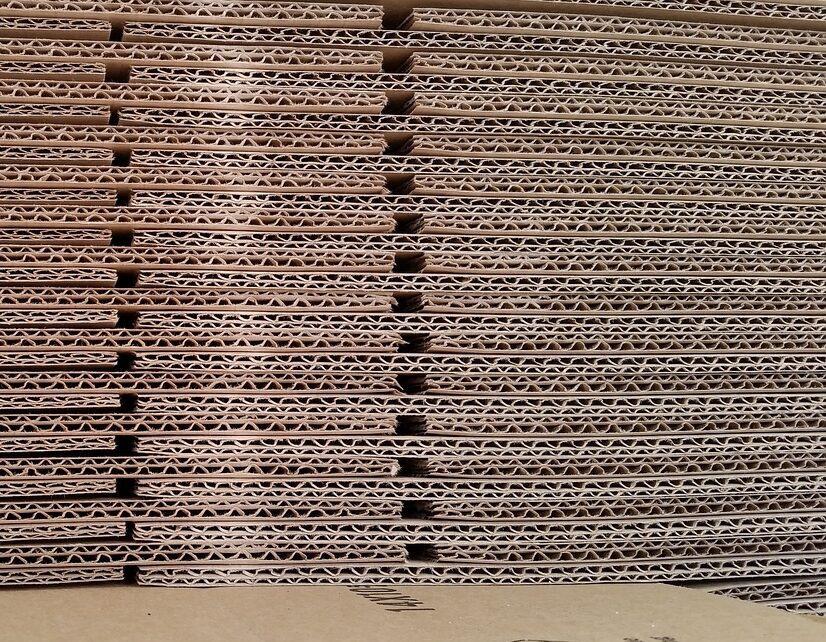
- What wall construction and board grade is being quoted? Single wall, double wall or triple wall board carries very different load and stacking performance. A quote that doesn’t specify wall type isn’t comparable to one that does.
- What’s the Edge Crush Test (ECT) rating? If boxes will be stacked in transit or storage, ECT tells you how much compression the board withstands before failure. Any supplier serious about B2B quality control should quote this on request.
- If buying used or surplus stock, how is it checked before resale? Ask specifically what inspection process is applied, structural damage, moisture, crushing, and whether checks happen batch by batch or only on complaint.
- Are dimensions and tolerances consistent across a full order? Inconsistent sizing causes real problems on automated packing lines and with courier fit checks. Ask for a sample before committing to volume if it’s a new supplier relationship.
- Is there a documented quality policy you can request? Suppliers confident in their process are usually willing to share it.
What to Ask About Sustainability Credentials
Sustainability claims are easy to make and harder to verify so it’s worth pressing on directly rather than taking a homepage badge at face value.
- Is the certification independently verified, and current? B Corp certification, for example, involves third-party assessment and periodic recertification as well as ISO certification.
- Can the supplier support your own reporting requirements? If your business tracks scope 3 emissions or reports under UK Extended Producer Responsibility (EPR) rules, ask whether the supplier can provide the documentation you’d need.
- Are sustainability claims specific, or vague? Be cautious of language like “eco-friendly” or “green” with nothing behind it. Ask for the certification name, the assessing body, and where you can verify it independently.
Reuseabox is B Corp certified, meeting an independently assessed standard across environmental and social performance, and our used and surplus box model is built around extending the life of existing boxes and we track that impact.
What to Ask About Account Terms
For a recurring business relationship, how you’re invoiced matters almost as much as what you’re buying.
- Are credit account terms available, and what’s required to open one? Most established UK packaging suppliers offer trade accounts, commonly on net-30 terms, subject to an application and credit check. Ask what’s needed and how long approval typically takes.
- Is pricing fixed for account holders, or does it fluctuate order to order? Some suppliers hold agreed pricing for account customers over a set period; others reprice every order based on market conditions. Ask which applies and get it in writing.
- Is there a dedicated account contact? For recurring orders, a named contact who understands your buying pattern is worth more than a generic sales inbox. Ask whether that’s part of the account setup.
- What reporting or invoicing format can the supplier provide? If your finance team needs consolidated monthly invoicing or specific PO referencing, confirm the supplier can accommodate it before you commit to ongoing orders.
What to Ask About Returns Policy
Deliveries occasionally go wrong, and how a supplier handles that says more about the relationship than almost anything else.
- What’s the process if a delivery arrives damaged or short? Ask specifically. Is it a replacement, a credit, a refund? And how quickly it’s typically resolved.
- Is there a window for reporting issues after delivery? Some suppliers require damage to be reported within a set number of days. Know the deadline before you need it.
- Who covers the cost of a return, if one’s needed? Ask whether return shipping falls to the supplier or the buyer, particularly for bulk or palletised orders.
- Is there a named contact for resolving delivery issues? A supplier who can only be reached through a general enquiry form will be slower to resolve a problem than one with a direct point of contact for account holders.
Frequently Asked Questions
What questions should I ask a cardboard box supplier before ordering?
How do I know if a supplier's sustainability claims are genuine?
Should I choose a supplier based on price alone?
Is it better to buy new or used cardboard boxes for my business?
Do UK packaging suppliers offer credit account terms?
Why you should choose Reuseabox as your cardboard box supplier
Reuseabox supplies new, surplus and used cardboard boxes to UK businesses across retail, e-commerce, 3PL and manufacturing, normally sold by the pallet. We supply single wall, double wall and triple wall boxes from standard shipping boxes to pallet boxes and octabins. We inspect every batch of used stock before resale and offer trade accounts with credit terms on application. As well as this, we track the environmental impact of our used stock and can provide reuse impact reports to support your scope 3 emissions reporting. Our purpose is to make it easier for people to reuse cardboard boxes, simply because it’s better for the planet.


 15 July 2026


