Hello@reuseabox.co.uk
 01636 626 476


 17 February 2026
Cardboard boxes are everywhere. They protect products, enable businesses to trade across the world, and make online shopping possible.
And yet many people are not fully aware of the environmental impact of cardboard boxes.
At Reuseabox, we believe it is vital to understand that impact and take positive, practical steps to reduce it.
Why Cardboard Matters 
Cardboard is often seen as a sustainable choice because it can be recycled and is biodegradable in the right conditions. However, like all packaging materials, the production, use, and disposal of cardboard has an environmental impact.
Globally, paper and cardboard production is one of the largest users of wood fibre. Tree harvesting, pulping, and processing require significant amounts of energy and water, while also releasing greenhouse gases. Even recycled cardboard must be reprocessed, which uses energy and contributes to emissions. Transporting boxes from factory to warehouse to business to customer also adds to the total carbon footprint.
The full picture shows that cardboard is not impact free. However, that does not mean abandoning it. It means using it in a much better way.
The Hidden Environmental Costs
To better understand the environmental impact of cardboard boxes, here are some key areas to consider:
1. Land Use and Forestry
The raw material for cardboard is wood fibre. While many manufacturers source from responsibly managed forests, global demand still drives land use change. Forests store carbon, support biodiversity, and regulate water cycles. Reducing forest cover reduces these natural benefits.
2. Energy and Emissions
Pulping and manufacturing cardboard involves electricity and heat, often generated from fossil fuels. These processes release carbon dioxide and other greenhouse gases. Transportation between sites also contributes to emissions.
3. Water and Waste
Paper production uses large volumes of water and creates wastewater. Treating these waste streams requires additional energy and resources. Without proper handling, this can affect rivers and soil health.
4. Single Use and Waste
Many boxes are used once and then discarded. Even though cardboard is recyclable, contamination from plastic tape or food waste can make recycling more difficult. In some areas, infrastructure limitations mean not all collected cardboard is successfully recycled.
How Reuseabox Reduces Impact
At Reuseabox, we see a world where cardboard boxes are used more than once. We specialise in supplying high quality used boxes as an alternative to single use packaging. Here is how that approach reduces its impact:
Lower Raw Material Demand
By giving boxes a second life, we reduce the need for new cardboard. This lowers demand for virgin wood fibre and reduces pressure on forests.
Cutting Carbon Emissions
Reusing boxes avoids the energy required to manufacture new ones. While transporting used boxes still has a footprint, overall emissions are significantly lower when a box is used multiple times.
Less Waste
Many used boxes would otherwise be recycled or sent to landfill after a single use. Extending their life keeps materials in circulation for longer and reduces disposal demand.
Supporting a Circular Economy
A circular economy keeps products and materials in use for as long as possible. That’s why we help thousands of businesses each year reuse cardboard boxes. Not only that, but we also track the impact of reuse.
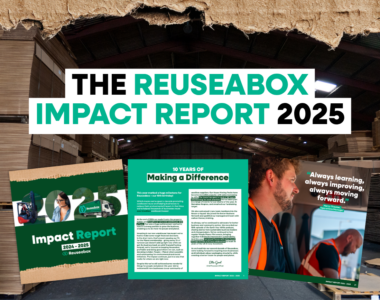
Every time you reuse cardboard boxes from Reuseabox, you get a free reuse impact report which shows your environmental savings. This includes total of how many trees, carbon, water, and energy you have saved.
Practical Ways to Reduce Cardboard Impact
Whether you are a business or an individual, there are simple steps you can take to reduce the environmental impact of cardboard packaging.
1. Choose Reuse First
Source used boxes where possible. Consider implementing a return scheme or encouraging customers to reuse boxes locally. Reuse delivers greater environmental benefit than recycling alone.
2. Pack Efficiently
Use the right size box for the product. Oversized packaging requires more material and often more filler, increasing both waste and emissions.
3. Recycle Properly
If a box cannot be reused, recycle it correctly. Remove excess tape and labels where required and check your local recycling guidelines.
A Smarter Way Forward
Reducing the environmental impact of cardboard boxes is not about eliminating packaging altogether. It is about making better use of what already exists.
Reusing a box might seem like a small action. But when done at scale, it significantly reduces raw material demand, energy use, and waste. Last year alone, millions of boxes were reused through our community. That is real, measurable impact from a simple shift in mindset.
If you are reviewing your packaging this year, reuse is one of the easiest changes to make. It cuts costs, reduces waste, and keeps perfectly good materials in use for longer.
If you would like to explore how used boxes could work for your business, you can request a quote, browse our current stock online, or try our reuse impact calculator to see the potential savings for yourself.


 24 August 2026